The structure and the finish are two separate lines on the quote
Stamped Concrete in Pearland, TX
Stamped concrete is an ordinary reinforced slab with a pattern and color pressed into the surface before it sets.
It runs $15 to $25 per square foot, against $8 to $13 for the same slab broom-finished.
- Color mixed through the concrete, not dusted on the top
- Joint layout drawn before the mats go on, not cut afterwards
- Structure and finish priced as two lines
Tell us the rough size, where it goes and roughly what look you are after. Someone comes out, measures, and you get the number in writing.
Stamped concrete keeps its color when it is colored through and cured evenly
NRMCA CIP 23 is direct about where discoloration starts: "the discoloration of concrete cast in forms or in slabs on grade is usually the result of a change in either the concrete composition or a concrete construction practice."
Its own list of factors is "the use of calcium chloride, variation in cement alkali content, delayed hydration of the cement paste, admixtures, hard-troweled surfaces, inadequate or inappropriate" curing. It adds that "concrete which is not properly or uniformly cured may develop discoloration" and that "uneven curing will affect the degree of hydration of the cement."
None of those is a stamping problem, and none of them can be fixed afterwards with more sealer. So the mix stays consistent from truck to truck, the color goes through the concrete rather than onto it, and the whole slab is cured the same way on the same schedule.
No fee, no obligation.
Stamped concrete quotes must state four things: slab, color, joints and sealer
The slab under the pattern
A stamped patio or drive is a structural slab first. We pour at 4 inches for foot traffic and patios and 5 inches where a vehicle parks, using 3,000 to 4,000 PSI ready-mix over 4 inches of compacted base, with mesh or #3 to #4 rebar chaired to mid-depth. Those numbers are on the quote exactly as they are on a plain slab, because a pattern adds nothing structural and hides nothing either.
Color through the mix, not dusted on the surface
We color integrally — pigment batched through the concrete — so a chip or a scuff shows the same color underneath rather than grey. Color hardener dusted onto the surface reads stronger on day one and is a thinner layer to lose. The release agent that stops the mats sticking also tints the surface, so the quote names both the base color and the release, and you see a sample of the pair before we pour rather than a color chart.
The joints, planned around the pattern
Concrete cracks; joints decide where. NRMCA CIP 6 puts maximum joint spacing at 24 to 36 times the thickness of the slab and recommends it be limited to a maximum of 15 feet, with panels "square or nearly so" and length no more than 1.5 times width, and the groove cut to a quarter of the slab depth but not less than 1 inch. On a stamped slab those lines have to be drawn before the mats go on, so the joints fall along the pattern instead of through the middle of it.
The sealer, and what shortens it
A decorative surface is sealed once it has cured, and the quote names the sealer, the resealing interval and the finish — matte, satin or gloss. Where the slab stays wet, around a pool or on a shaded walkway, grit goes into the sealer for grip rather than being offered as an upgrade later. The two things that take a decorative surface apart fastest are chemical de-icers and metal blades dragged across it.
A plain drive: concrete driveways. A plain patio: concrete patios. Around a pool: concrete pool decks. A pattern over concrete you already own: concrete resurfacing. Resealing a stamped surface you already have: concrete sealing. Cracked or dropped first: concrete repair. Everything else: concrete services.
The spec goes on the quote before you decide anything.
Stamped concrete is the most expensive decorative finish, and three cost less
Exposed aggregate washes the surface back to reveal the stone in the mix. Saw-cut scoring cuts a pattern of lines into a plain slab. A broom finish, colored integrally, changes the look without any pattern work at all.
All three sit between $8 and $13 per square foot where stamping sits between $15 and $25, on an identical slab. We price the finish you asked about and the cheaper one beside it, so the difference is a number rather than a conversation.
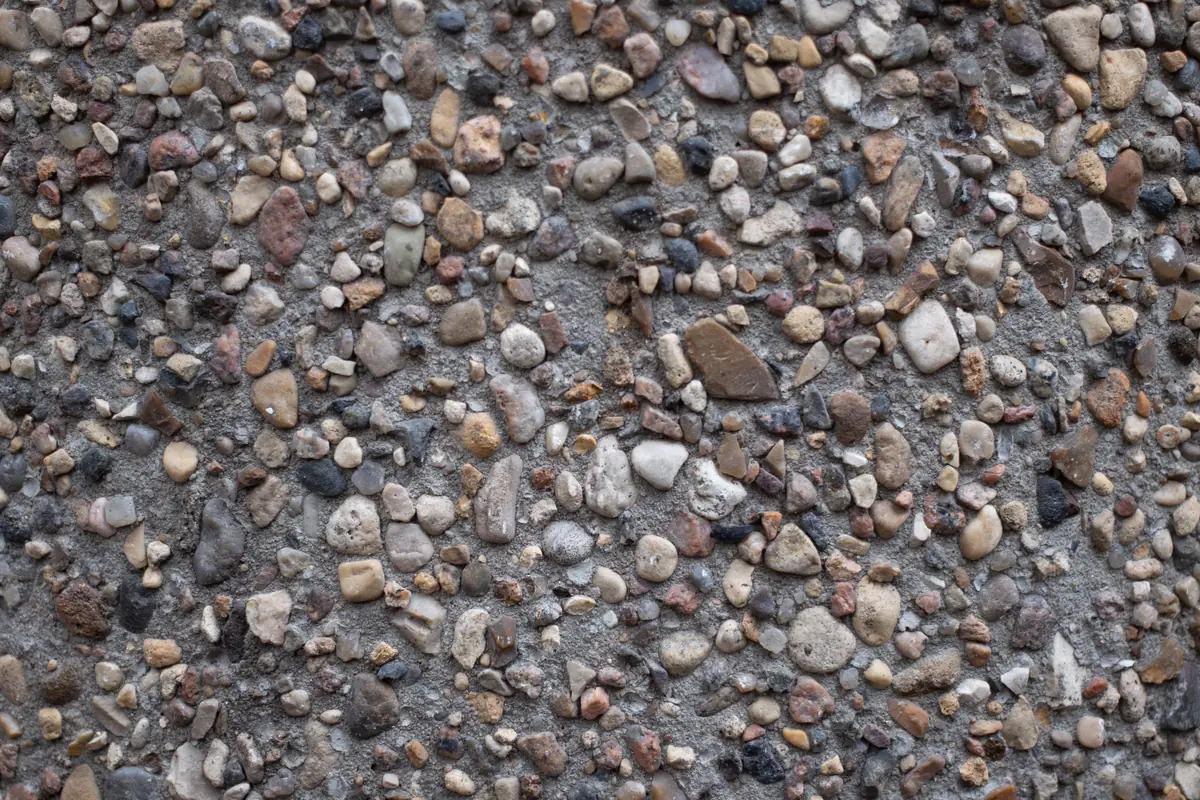
Stamped concrete in Pearland lasts on the cure, the finish and the sealer
A slab cured unevenly comes out colored unevenly
CIP 23 states plainly that concrete which is not properly or uniformly cured may develop discoloration. On a colored slab that is not a technicality — it is the whole product.
NRMCA CIP 11 adds the Gulf Coast version of the problem: in hot weather a higher initial curing temperature gives rapid strength gain and lower ultimate strengths, and it recommends water curing to bring summer temperatures down. A stamped pour here is early work, cured wet, on one schedule across the whole slab.
How it is finished changes the color it comes out
CIP 23 puts "hard-troweled surfaces" on its list of factors that influence discoloration, tells finishers to eliminate trowel burning, and notes that "concrete surfaces that are troweled too early will increase the water-cement ratio at the surface and lighten the color."
Adding water on site to keep a mix workable in the heat, or starting to finish while bleed water is still standing, does its own damage to the very top of the slab. On a plain slab that shows up years later as flaking. On a colored slab it shows up immediately, as patches.
Sun and water, rather than salt and snow
The northern enemies of decorative concrete are de-icing chemicals and freeze-thaw cycling. Neither is a Gulf Coast problem, which genuinely helps a colored surface last here.
What replaces them is ultraviolet on an exposed slab and water that stands rather than drains. So the sealer and the resealing interval are named on the quote, and the fall is set the same way it is on any other slab we pour.
The site visit tells you which of these you have.
Stamped concrete cure times: walk after 48 hours, drive after 7 days
Heat is the risk here, not cold. NRMCA CIP 11 notes that in hot weather a higher initial curing temperature gives rapid strength gain and lower ultimate strengths, so a summer pour gets water curing rather than a hurried finish.
Design strength is assessed at 28 days (NRMCA CIP 35); curing and hot-weather guidance from NRMCA CIP 11. The walk-on and drive-on dates are trade practice, and the ones for your pour are written on your quote.
Our stamped concrete quote states the slab, the color, the joints and the sealer
Same pattern, same color, same yard. The difference is whether the slab under it was ever specified.
| On the page | HTX Concrete Co. | A one-line quote |
|---|---|---|
| Price | One number for the job as scoped | A per-foot range that moves on the day |
| Slab thickness | Stated in inches | Not mentioned |
| Reinforcement | Rebar or mesh, size and spacing | "Reinforced" — the entire line |
| Joint spacing | Planned and written | Cut wherever, if at all |
| Haul-off and clean-up | In the price | Added at the end |
Take our quote to any other contractor and compare it line by line.
Free, and it puts you under no obligation.
Stamped concrete in Pearland costs $15 to $25 a square foot
The 2026 market ranges, with the specification each number assumes. The structural slab is identical across the first group, so the finish is what moves the number.
| Work | What the number assumes | Typical range |
|---|---|---|
| A new slab, finished four different ways | ||
| Stamped and colored | pattern mats, integral color, release agent, penetrating sealer | $15–$25 / sq ft |
| Broom-finished patio | 4in slab, 3,000–3,500 PSI, mesh or #3 rebar, 4in base | $8–$13 / sq ft |
| Broom-finished driveway | 4in slab, 4,000 PSI, #3 rebar at 18in on center | $7–$12 / sq ft |
| Sealing once it has cured | cleaned, then a penetrating sealer at the stated coverage | $1–$3 / sq ft |
| Decorative work over concrete you already own | ||
| Stamped or scored overlay | ground and primed, polymer-modified overlay, stamped, colored, sealed | $8–$14 / sq ft |
| Plain resurfacing, broom finish | ground and primed, polymer-modified overlay, sealed | $4–$8 / sq ft |
| Repair first, where the cracks are live | crack cut to a clean channel, backer rod, polyurethane sealant | $8–$18 / linear ft |
| Demolition and haul-off | existing 4in slab broken out and disposed of — national range | $3–$6 / sq ft |
What moves a number inside its range: the pattern and how many mats it needs, one color or two, how much of the slab is edge and detail work rather than open field, and access for the truck. The gap between the first row and the second is the honest question worth asking before you commit — it is the same slab, and roughly twice the price, for the finish alone.
Free, and it puts you under no obligation.
Working with us, in four steps
Four steps. You can stop after the second one at no cost.
You call, we come out
We measure up, check the ground and the drainage, and tell you what the job needs.
You get the price in writing
One fixed price, with the slab thickness, the reinforcement, the joint layout, the color and the sealer stated — and the plain-finish price for the same slab beside it.
We pour, color, stamp the pattern and cut the joints
Ground prepared and compacted, steel set, then the pour, the color, the mats worked in while the concrete is still plastic, and the joints cut to the plan.
We seal it and the slab cures
We seal it once it has cured and hand over the aftercare in writing, with the walk-on and drive-on dates already on the quote.
Walk 24–48h · car 7 days · heavy 28 days
Step one costs nothing and commits you to nothing.
Stamped concrete questions people ask before they book
Is stamped concrete more likely to crack than plain concrete?
Is stamped concrete slippery?
How often does stamped concrete need resealing?
Can you stamp over my existing concrete?
Tell us what the job is. We'll price it in writing.
Send the rough size and what you want done. Someone comes out, measures, and you get one fixed number in writing — not a range that moves on the day. Nothing is owed if you don't go ahead.
On-site estimate is free · no obligation · the written quote is yours to keep.
- Free on-site estimate across Pearland and the south Houston ring
- Fixed price in writing before we start
- Reinforcement and thickness stated on the quote
- Clean-up and haul-off included