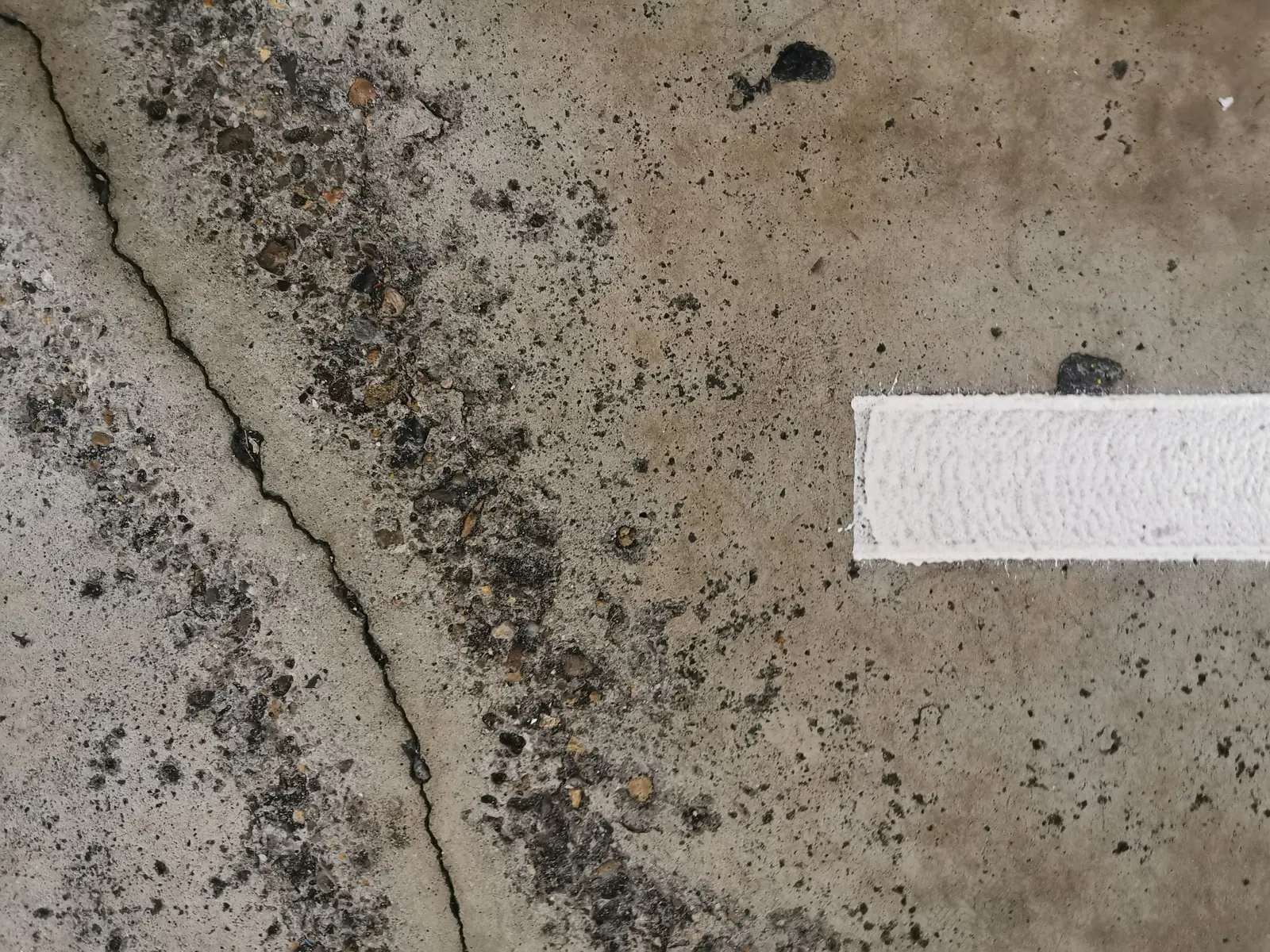
Crack, spall or failed panel — and the fix each one needs
Concrete Repair in Pearland, TX
Concrete repair splits three ways: a crack that is still moving, a surface flaking off the top, or a panel that has broken up or dropped.
Two of the three start in the ground, not in the concrete, so we work out what the clay under your slab is doing before we price the fix.
- The failure is named at the estimate, before a price is quoted
- Failed panels are saw-cut out and repoured, never skimmed over
- You get two prices, repairing it and replacing it, so you can compare them
Tell us what the damage looks like and roughly how much of it there is. Someone attends, measures, and the number comes back in writing.
Concrete cracks from ground movement and trapped water at the same time
The ground under much of Pearland is coastal-prairie clay formed on Beaumont Formation deposits. The USDA describes the Lake Charles series of these soils as opening cracks 1 to 5 cm (1/2 to 2 in) wide at the surface, reaching 30 cm (12 in) deep or more, and staying open for 60 to 90 cumulative days in most years.
The same description explains what that does to a slab: water enters the soil rapidly when cracked, but very slowly once it is wet and the cracks have closed. Rain drops straight down an open crack to the sub-base, the clay swells shut over it, and the water has nowhere left to go.
So a repair that treats the concrete and ignores which of those two caused it buys a season. We work out where the water goes before we price the fix.
No fee, no obligation.
Concrete repair splits four ways: seal, inject, replace or resurface
Routing and sealing a moving crack
Routing and sealing is the repair for a crack that is still opening and closing with the ground and is not going to stop. We cut the crack out to a clean square channel, set backer rod to depth, and fill it with a flexible polyurethane sealant that stretches with the slab instead of splitting alongside it. It is priced by the linear foot and quoted as maintenance, which on ground that moves seasonally is honestly what it is.
Epoxy injection on a structural crack
Epoxy injection is the repair for a crack through a slab that has stopped moving and needs its strength back. We fit surface ports along the crack, seal the face, and inject structural epoxy under pressure until the crack takes no more, which bonds the two faces into one slab again. Injecting a live crack on this clay is money spent on a joint that reopens beside the repair, so the quote says whether we believe the movement has stopped.
Replacing a failed panel
Panel replacement is the repair for concrete that has cracked into pieces, stepped down at a joint, or lost the base underneath it. We saw-cut the failed section out to the nearest existing joints, haul it away, rebuild and compact the base, then repour at full thickness with #3 or #4 rebar dowelled into the panels that stay. One warning about color: new concrete does not match concrete that has been down twenty years.
Resurfacing a spalled slab
Resurfacing is the repair for a slab that is structurally sound but has lost its top surface to flaking, scaling or staining. We mechanically profile the existing concrete, prime it, bond a polymer-modified overlay across it, finish it broomed or stamped, and seal it. Over concrete that is cracked and still moving, an overlay buys a year of looking better and then the same crack comes through, so the quote says first whether your slab is a candidate.
Past repairing, the whole drive out: concrete driveways. Only the top surface gone: concrete resurfacing. A patio beyond patching: concrete patios. A pad poured on grade: concrete slabs. The per-square-foot breakdown: concrete driveway cost. Everything else: concrete services.
The spec goes on the quote before you decide anything.
Concrete repair covers driveways, patios and walks, not house foundations
We do not do house foundation repair: no piers, no underpinning, no leveling of the structure. If the doors are sticking and the interior walls are cracking, the trade you want is a foundation repair contractor, and we will tell you that at the estimate rather than sell you a driveway.
We also do not do polyurethane foam lifting or mudjacking. A sound slab that has sunk as one piece is cheaper to lift than anything we would do, and there are specialists in this market who do nothing else. Driveways, patios, walks, steps and slabs on grade are the work we take.
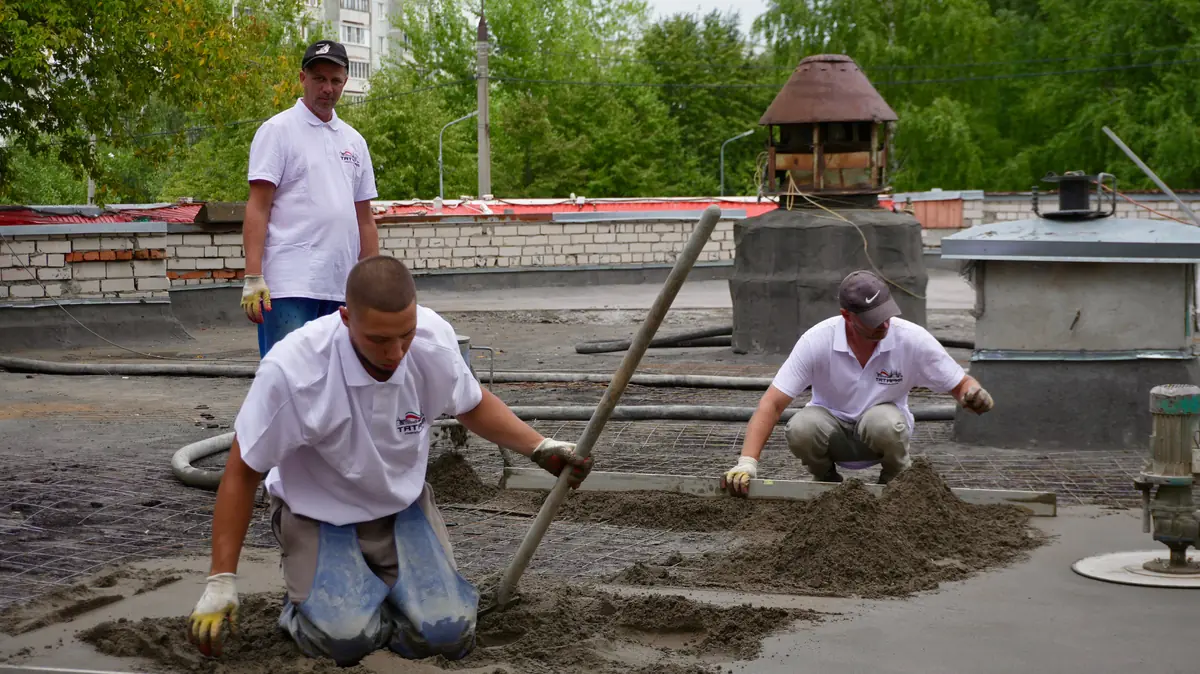
Concrete repair beats replacement until about a third of the slab has failed
Routing and sealing a crack runs $8 to $18 per linear foot, and cutting a failed panel out and repouring it runs $8 to $15 per square foot.
Replacing a driveway outright is $7 to $12 per square foot, plus $3 to $6 to break out and haul the old slab away.
Past about half the area, replacement wins on cost per remaining year, and you stop paying to patch the same slab every other dry spell.
We will tell you which one you need.
Concrete in Pearland fails from moving clay and water that cannot get out
Three of the four repairs we price trace back to the ground under the slab, not to the concrete.
Cracks that follow the clay as it opens
The Lake Charles clays of this coastal prairie are classed by the USDA as Typic Hapluderts — shrink-swell soils. Dry, they open cracks 1 to 5 cm (1/2 to 2 in) wide at the surface that reach 30 cm (12 in) deep or more, and those cracks stay open for 60 to 90 cumulative days in most years.
A slab bridging ground that moves that far has to crack somewhere, and it picks its weakest line. Those cracks are still moving season to season, which is why they get routed and sealed rather than filled and forgotten.
Water that goes straight down and cannot get back out
The USDA description of these soils is blunt about it: permeability is very slow, water enters the soil rapidly when cracked, but very slowly when it is wet and the cracks are closed.
Rain drops through an open crack to the sub-base, then the clay swells shut above it. What was a compacted base under your slab is now a soft, saturated one, and the slab finds that out at the joints.
Panels dropping over a shrunken base
When the clay pulls back from the underside of a slab, the concrete spans a gap it was never designed to span. The next loaded vehicle finds it, and the panel either cracks through or steps down at a joint. The street end is where a drive is widest and where the delivery truck parks, so that is where it shows first.
If the slab has sunk as one sound piece, lifting is the correct fix and we will say so. If it has broken up, it comes out to the joints and the base is rebuilt before anything is repoured.
The site visit tells you which of these you have.
Concrete repair cure times: walk after 48 hours, drive after 7 days
Heat is the risk on this coast, not cold. NRMCA CIP 11 states that "in hot weather, higher initial curing temperature will result in rapid strength gain and lower ultimate strengths", so a summer repour gets water cured instead of being left to the sun.
Design strength is assessed at 28 days (NRMCA CIP 35); curing and hot-weather guidance from NRMCA CIP 11. The walk-on and drive-on dates are trade practice, and the ones for your pour are written on your quote.
Our concrete repair quote names the cause, the fix and what it will not solve
Same slab, same cracks. The difference is whether anyone wrote down what the fix does not solve.
| On the page | HTX Concrete Co. | A one-line quote |
|---|---|---|
| Price | One number for the job as scoped | A per-foot range that moves on the day |
| Slab thickness | Stated in inches | Not mentioned |
| Reinforcement | Rebar or mesh, size and spacing | "Reinforced" — the entire line |
| Joint spacing | Planned and written | Cut wherever, if at all |
| Haul-off and clean-up | In the price | Added at the end |
Take our quote to any other contractor and compare it line by line.
Free, and it puts you under no obligation.
Concrete repair cost in Pearland runs $8 to $25 a linear foot for cracks
The 2026 national ranges for repair work, with the specification each number assumes. Your fixed number comes after the site visit.
| Work | What the number assumes | Typical range |
|---|---|---|
| Crack and surface repair | ||
| Rout and seal a crack | crack cut to a clean channel, backer rod set to depth, polyurethane sealant | $8–$18 / linear ft |
| Epoxy injection | surface ports, face sealed, structural epoxy injected under pressure | $12–$25 / linear ft |
| Resurfacing a spalled slab | mechanically profiled and primed, polymer-modified overlay, broom finish | $4–$8 / sq ft |
| Decorative or stamped overlay | as above, then stamped or scored, colored and sealed | $8–$14 / sq ft |
| Structural repair and replacement | ||
| Replace a failed panel | saw-cut to the nearest joints, base rebuilt and compacted, dowelled and repoured | $8–$15 / sq ft |
| Demolition and haul-off | existing 4–5in reinforced slab broken out, loaded, hauled and disposed of | $3–$6 / sq ft |
| Full driveway replacement | 4in slab, 4,000 PSI, #3 rebar at 18in on center, broom finish | $7–$12 / sq ft |
| Replacement for trucks or an RV | 5in slab, #4 rebar at 18in on center, thickened edge | $10–$16 / sq ft |
The rule we price to: under about a third of the area affected, repair wins clearly. Between a third and a half is the honest grey zone, and you get both numbers instead of the bigger one. Over half, replacement wins on cost per remaining year, and you stop repairing the same slab every dry season.
Free, and it puts you under no obligation.
Working with us, in four steps
Four steps, and the second one is where you find out whether the repair is worth doing at all.
You call, we come out
We measure up, check the ground and the drainage, and tell you what the job needs.
You get the price in writing
One fixed price, with the thickness, the reinforcement and the joint spacing stated. The city does not ask for those on its driveway permit application — but it does send a building inspector to look at a concrete driveway, so you have them anyway.
We cut the failed sections out and repour
Failed sections cut out, the base rebuilt and compacted, then new concrete dowelled into the concrete that stays.
We clear the site and the slab cures
You get the day it is ready to use, and that date was on your quote from the start.
Walk 24–48h · car 7 days · heavy 28 days
Step one costs nothing and commits you to nothing.
Concrete repair questions people ask before they book
Who are the best concrete repair contractors near me in Pearland, TX?
How much does it cost to fix a cracked driveway in Pearland?
What causes concrete to flake and peel on the surface?
Do you repair house foundations, or do foam lifting?
Tell us what the job is. We'll price it in writing.
Send the rough size and what you want done. Someone comes out, measures, and you get one fixed number in writing — not a range that moves on the day. Nothing is owed if you don't go ahead.
On-site estimate is free · no obligation · the written quote is yours to keep.
- Free on-site estimate across Pearland and the south Houston ring
- Fixed price in writing before we start
- Reinforcement and thickness stated on the quote
- Clean-up and haul-off included